

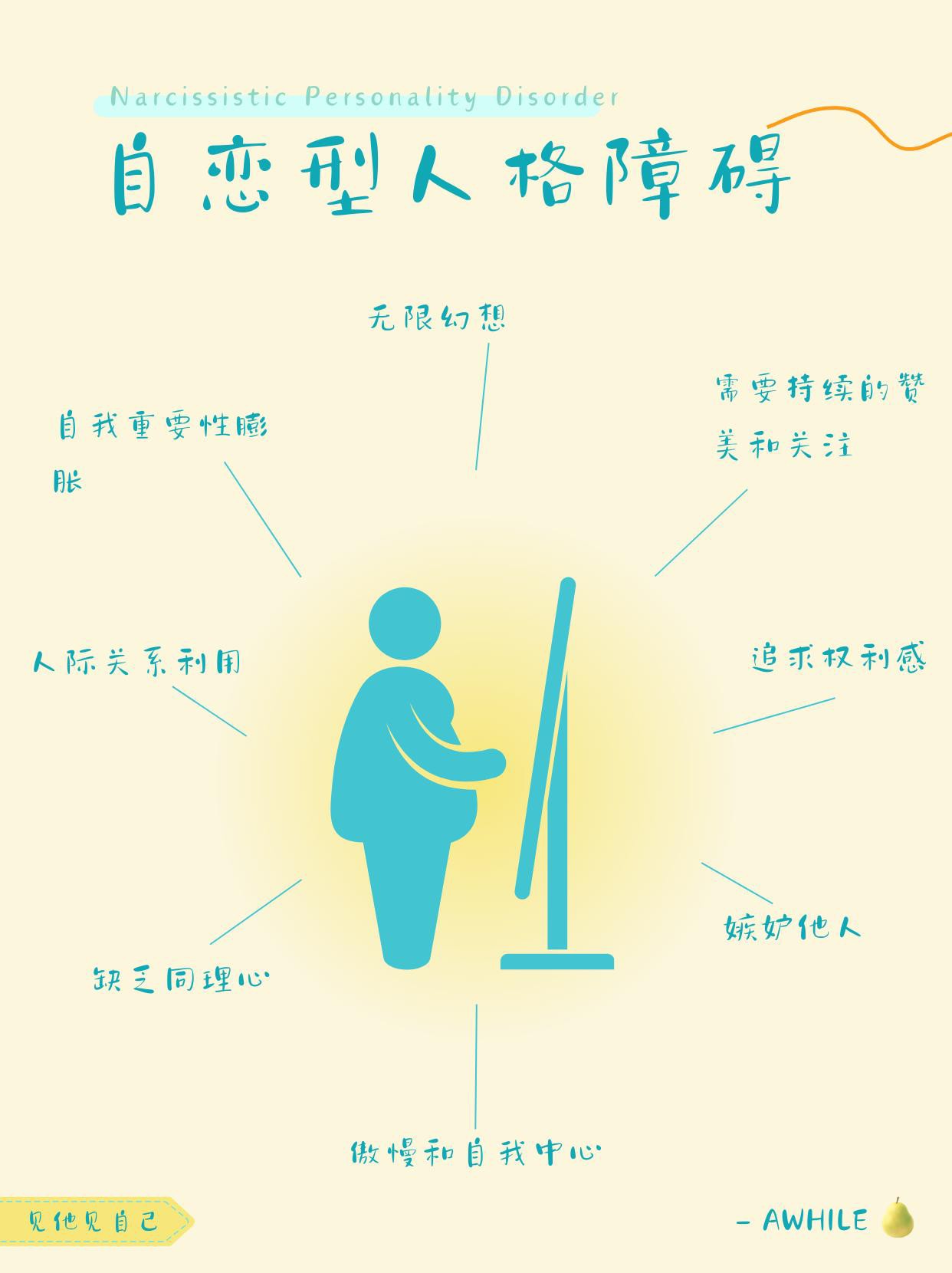
Complete NPD Overview: I. Basic Definition NPD = Narcissistic Personality Disorder. Narcissistic personality disorder belongs to category B, dramatic personality disorder, in the DSM-5 (Diagnostic and Statistical Manual of Mental Disorders). It is a long-term, stable, and cross-situational psychological pattern, with three core characteristics: 1. Persistent grandiosity and exaggeration of self; 2. An extreme craving for admiration and approval from others; 3. A fundamental lack of empathy. Symptoms often appear in early adolescence, severely damaging intimate relationships, workplace, and social functioning. Professional diagnosis by a psychiatrist is essential; self-labeling should be avoided. II. DSM-5 8 Diagnostic Criteria (5 or more criteria must be met for diagnosis) 1. Exaggerated self-worth, boasting and fabricating achievements, believing oneself to be superior to others; 2. Obsessed with fantasies: unlimited success, power, beauty, perfect love; 3. Firm belief that one is special and only worthy of associating with high-end, outstanding individuals; 4. Extreme need for constant praise and attention, feeling empty without recognition; 5. Sense of entitlement: feeling entitled to special treatment, ignoring rules; 6. Interpersonal exploitation: using others to achieve one's own goals; 7. Lack of empathy: not understanding or caring about the suffering of others; 8. Prone to jealousy of others, or believing that others are jealous of oneself. III. Two Main Subtypes 1. Overtly Expressive (Extended NPD): Extroverted, boastful, arrogant, and domineering, easily angered by minor setbacks (narcissistic rage), openly belittling and devaluing others, and unabashedly demanding praise. 2. Latent Vulnerability (Hidden NPD): Outwardly introverted, sensitive, insecure, and prone to playing the victim; inwardly harboring a sense of superiority, easily hurt by criticism, resorting to the silent treatment, passive aggression, and seeking emotional support through sympathy. IV. Core Underlying Logic: False Self + Narcissistic Supply 1. False Mask: A perfect and superior persona presented to the outside world to mask deep-seated insecurity and emptiness; 2. Narcissistic Supply: Requires praise, compliance, and attention from others to maintain self-esteem; loss of this supply leads to anxiety, rage, and passive-aggressive behavior; 3. Lack of Genuine Empathy: Not "unwilling to understand," but incapable of perceiving others' emotions; everyone is merely a tool to satisfy one's own emotional needs. V. Common Harmful Behaviors (Most Typical in Intimate Relationships) - Gaslighting: Distorting facts, making you doubt your memory and rationality; - Degradation and Suppression: First, idealizing and praising you to the skies, then continuously negating and humiliating you after you get what you want; - Triangular Relationships: An ambiguous third party stimulates you and competes for attention; - Emotional Abuse and Abrupt Abandonment: Completely withdrawing once you lose your usefulness; - Blaming and Lack of Responsibility: Always blaming others, never reflecting on your own actions or apologizing. VI. Two Major Root Causes (Mainly Acquired) 1. Extreme Pampering: Unconditional praise in childhood, parents instilling the idea that "you are special," making it impossible to accept ordinariness or criticism; 2. Long-Term Emotional Abuse/Neglect: Being belittled, neglected, and negated in childhood, constructing a "perfect false self" to protect self-esteem; Combined with genetics and differences in the development of the brain's empathy areas, this solidifies into a personality pattern. VII. Important Distinction: Ordinary Narcissism ≠ NPD 1. Healthy Confidence/Mild Narcissism: Able to empathize, accept criticism, understand perspective-taking, and do not harm others; 2. NPD Personality Disorder: Rigid behavior, persistent exploitation of others, inability to empathize, comprehensive impairment in life, and is a mental illness. VIII. Real-world Reminders 1. Labeling people around you with "NPD" online is inaccurate; diagnosis requires a psychiatric consultation; 2. People with NPD generally lack awareness of their condition, rarely seek medical help proactively, and are extremely difficult to change; 3. If you experience self-doubt, depression, or internal conflict due to prolonged contact with someone with NPD, prioritize physical distance and protect your own emotions.
 25376天前
 初陽
初陽














Comments 0