

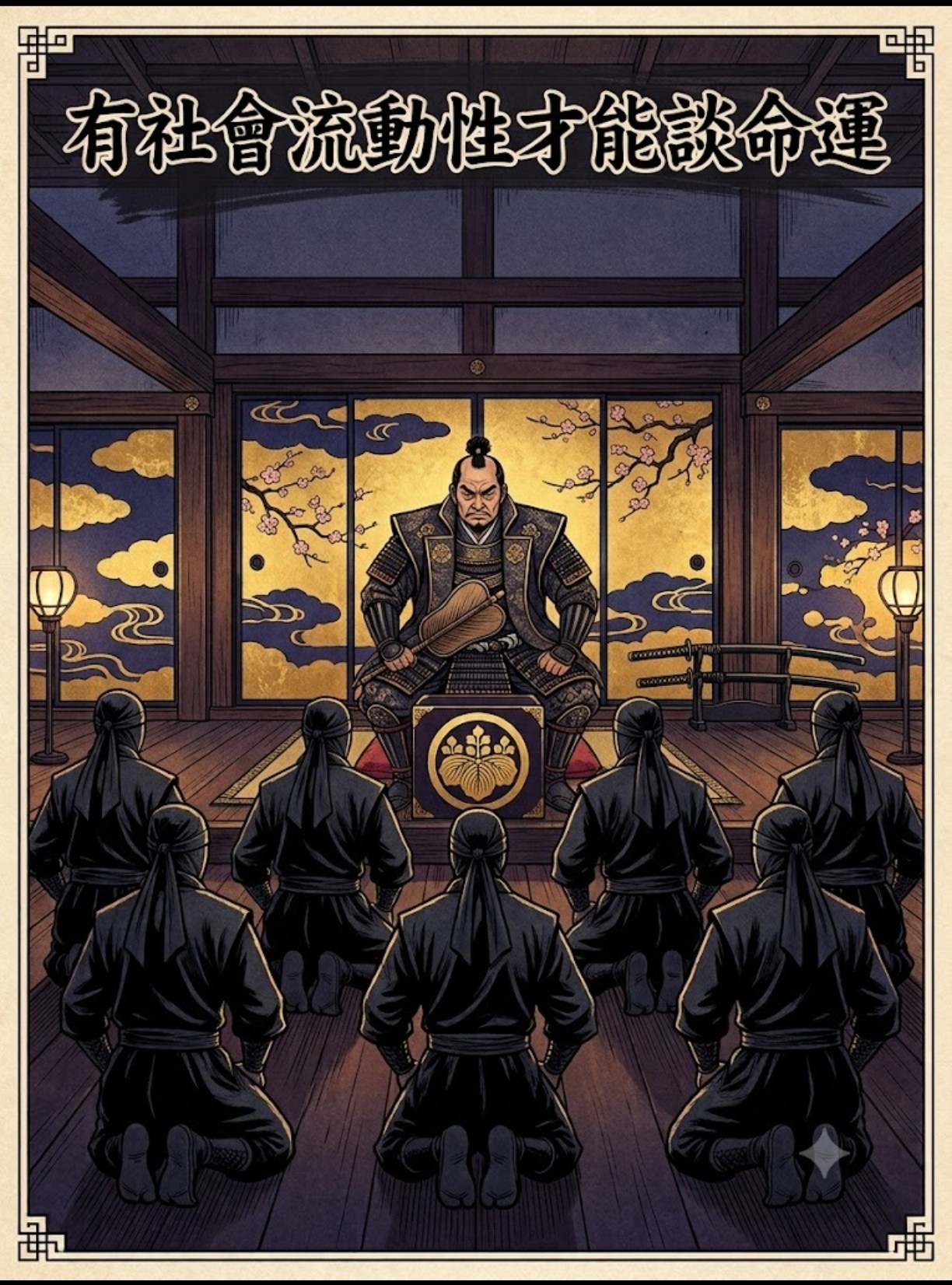
I recently read an article explaining the Japanese concept of "isseikenmei" (一生懸命). "Isseikenmei" doesn't represent the Japanese being particularly resolute or persistent. It's a way of life forced upon them by the social structure. "Isseikenmei" doesn't mean that once you enter a profession, you dedicate your entire life to it. Rather, it means that before World War II, if you inherited a family business or were absorbed into a family's workforce, you could forget about changing careers! Aside from fishing and farming, which were common occupations, other jobs were scarce, and people generally had very low trust in strangers, making career changes extremely difficult. The most likely outcome was joining another family through adoption or marriage. In pre-WWII Japan, apart from lords and samurai, all professions were family-run. Those who were marginalized, even if they didn't starve, had over 90% chances of achieving anything significant. After the bursting of the bubble economy in 1995, the restrictions on changing jobs in Japan eased (because tens of thousands of companies went bankrupt), but this cultural phenomenon persists. Then I watched another short video that said the truth about caste in India is that there aren't five, but over a thousand! Your surname indicates which family you belong to in terms of profession. To change your fate, you need extraordinary luck. Therefore, people growing up in these countries would consider fortune-telling meaningless. Because the biggest factor determining your destiny is the family you were born into! It's not about whether people are wealthy, but about whether there is widespread freedom of belief in society. Only in countries with high social mobility will people think: What kind of person do I want to become when I grow up? How can I strive to achieve this ideal? For people in these countries, studying destiny is meaningful.
 10014天前
 艾石
艾石














Comments 0