

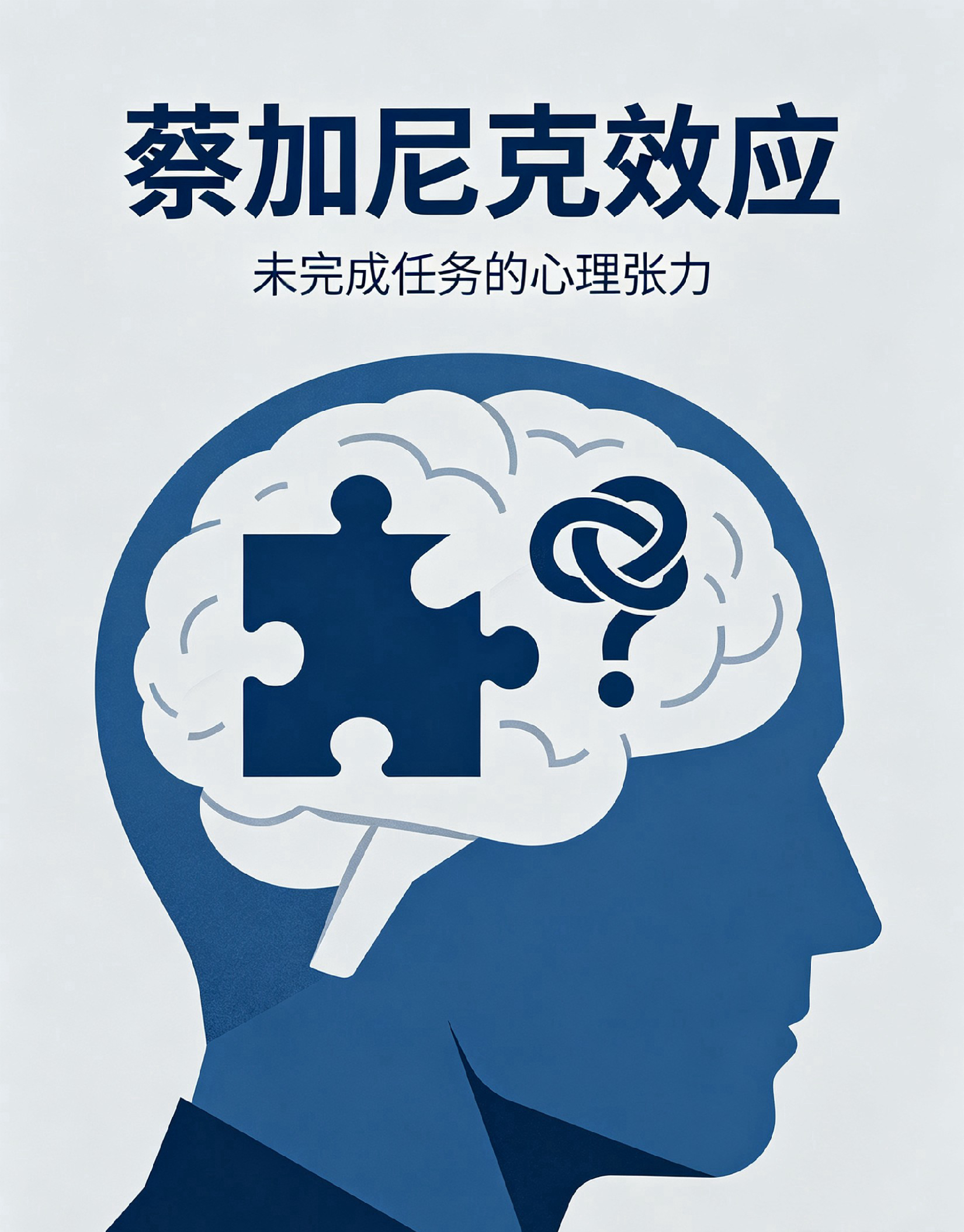
The core definition is that people remember unfinished or interrupted tasks/things far more vividly and permanently than completed ones. This originated from the discovery by Soviet psychologist Zeigarnik: restaurant servers could accurately remember unpaid orders, while customers quickly forgot them after paying. The principle is that unfinished tasks keep the brain in a state of tension, prompting repeated attention; once the task is completed, the mental tension is relieved, and the memory fades quickly. Practical applications: 1. Learning and memory: Don't try to memorize or practice problems all at once; pause midway, leaving gaps for stronger memory. 2. Attention management: If distracted by unfinished tasks, make a list to finish them and release mental burden. 3. Communication/expression: Leaving small suspense or unfinished points in conversation or sharing makes them easier to remember. 4. Overcoming procrastination: When you don't want to do something, start with a small step (creating an unfinished state); the brain will then compel you to continue.
 237108天前
 初陽
初陽














Comments 0